Thinking Fear · 2019—
The void already has a form
The Fascists belongs to the wider body of work Thinking Fear, begun in 2019. The photographic sequence presented here was produced in 2022. It is Jean-Marie Reynier’s first work in which artificial intelligence enters directly into the making of the image. AI appears neither as a technical feat nor as an autonomous subject. It operates among other procedures — matter, modelling, photography and instant chemistry — and contributes to the construction of beings whose existence remains entirely visual.
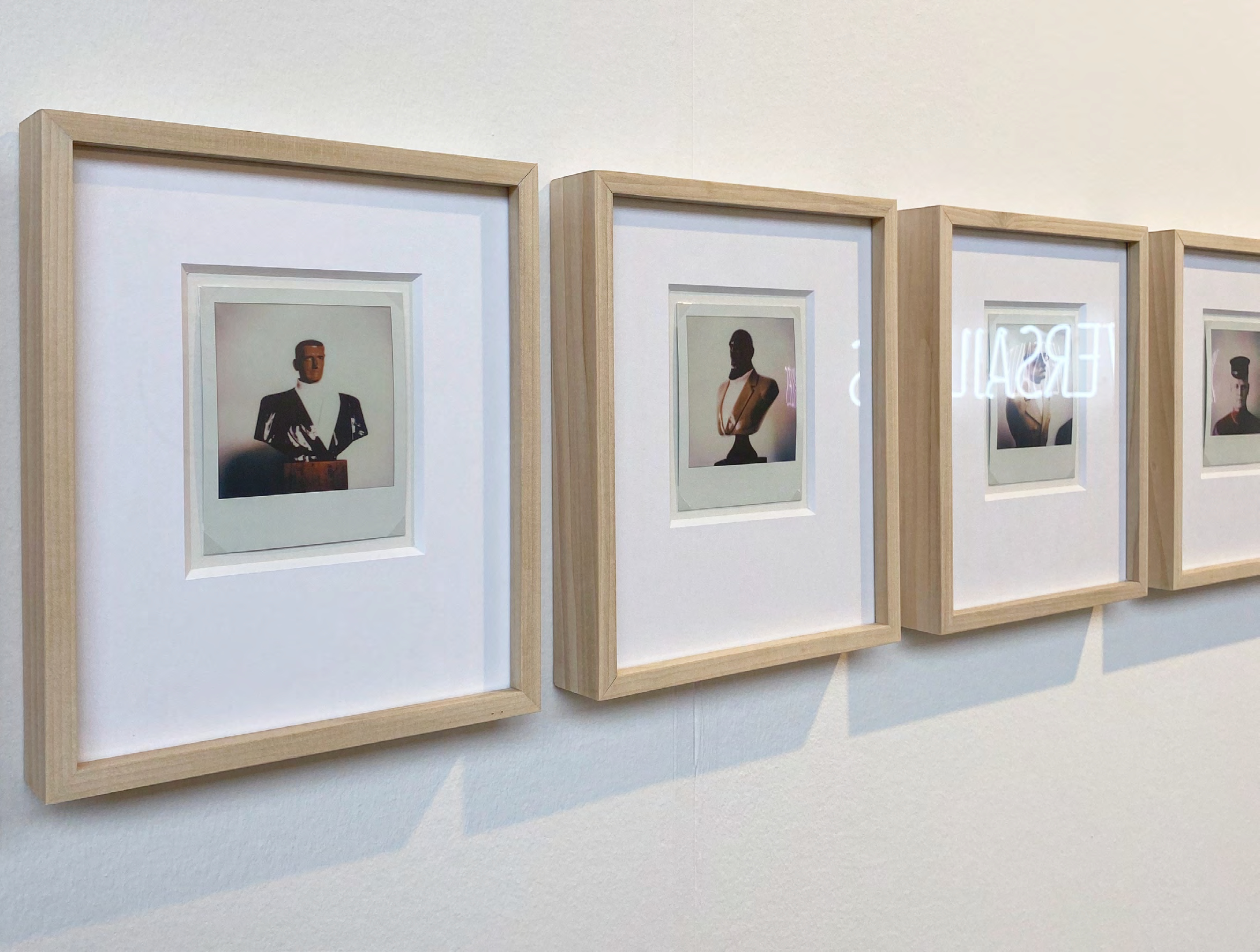
The photographs show busts of fascists who never existed. Their appearance emerges from a hybrid process involving malleable matter, close to modelling clay, generative imagery and Polaroid. Each stage lends credibility while further removing the referent. Volume promises a body; the algorithm arranges plausible signs; the Polaroid gives the fiction the presence of a unique object exposed to light and time. What we see takes the form of evidence, yet that evidence points to no one.
The choice of the bust is decisive. Inherited from the monument, the museum and the official portrait, it turns an individual into an emblem. It simplifies the body, straightens the posture, isolates the face and establishes the distance authority requires. Here, however, the effigy precedes the person it should represent. Uniform, pedestal, sash, profile and gaze already compose power; the real subject can remain absent. Authority is manufactured without biography, without voice and without personal history.
This absence produces a particular unease. We believe we recognise periods, offices, perhaps even personalities. Yet nothing can be identified. The viewer completes what the image leaves vacant, summoning a collective memory of the leader, the dignitary, the military hero or the servant of the state. The synthetic image makes use of our desire for coherence and reveals how few signs are needed for a figure to appear legitimate, historical and already known.
The void from which the series proceeds is multiple: the missing model behind the portrait, the missing person behind the office, the missing experience behind the symbol; the political void into which fear, resentment and a desire for order settle. To speak of fascism’s emptiness is not to deny its doctrines, violence or historical responsibility. It identifies fascism’s ability to reconcile contradictory elements, change vocabulary and appearance, and occupy spaces that politics, institutions or social bonds have ceased to inhabit.
Fascism does not always return under its former emblems. It can present itself as restoration, efficiency, protection, common sense or a return to reality. It enters emotional fractures as readily as collective crises. Fear turns uncertainty into an expectation of rules, gives the enemy a face and converts fragility into a demand for authority. The subjectless bust becomes the exact image of a form ready to receive any name.
The restrained beauty of the Polaroids makes the device more dangerous. Nothing is strident; the colours are soft, the frames classical, the objects desirable. Authoritarian regimes have always understood that formal order can precede allegiance, that repetition produces familiarity, and that the familiar eventually appears normal. The series examines the aesthetic conditions through which a fiction of authority becomes acceptable.
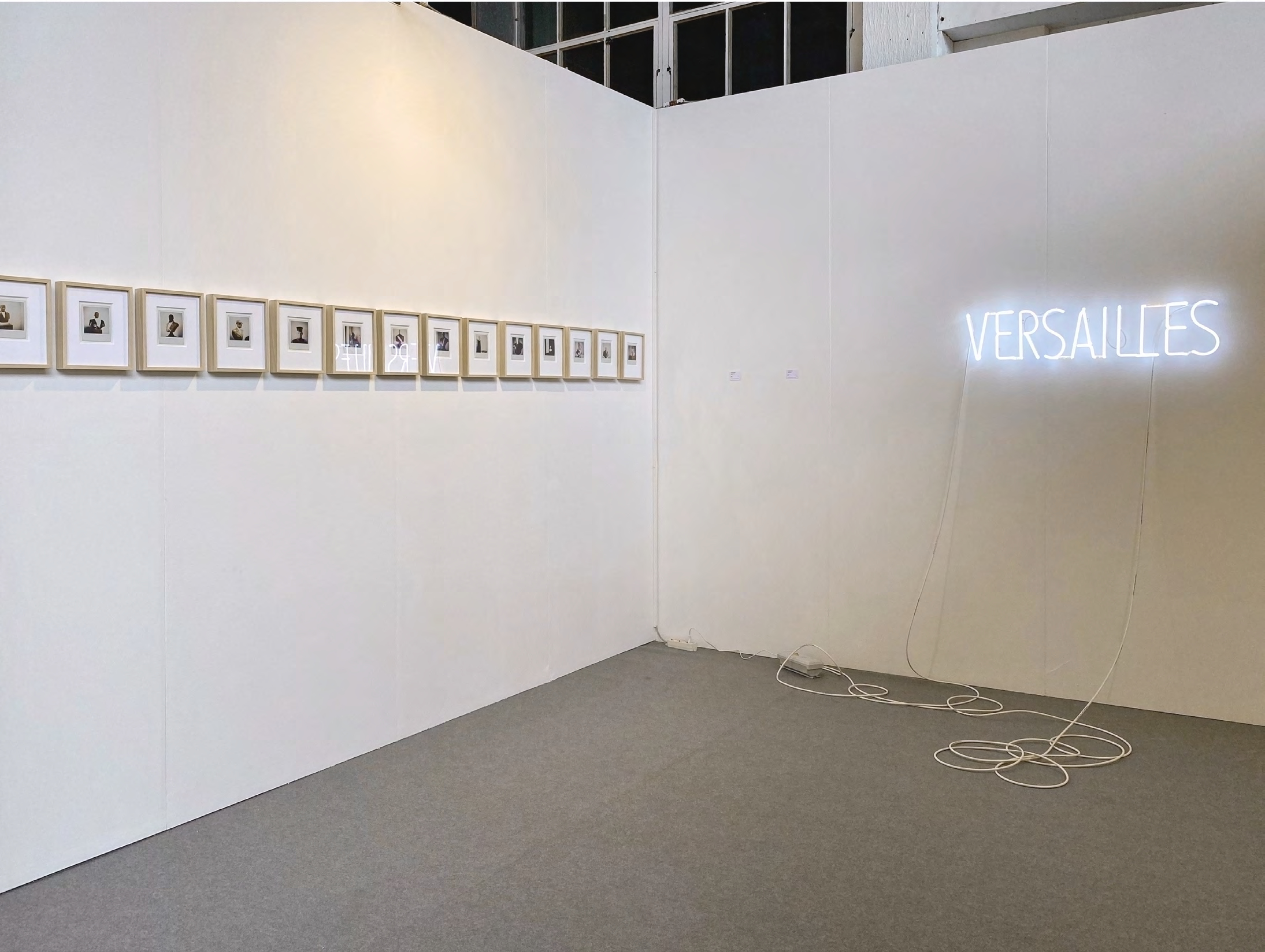
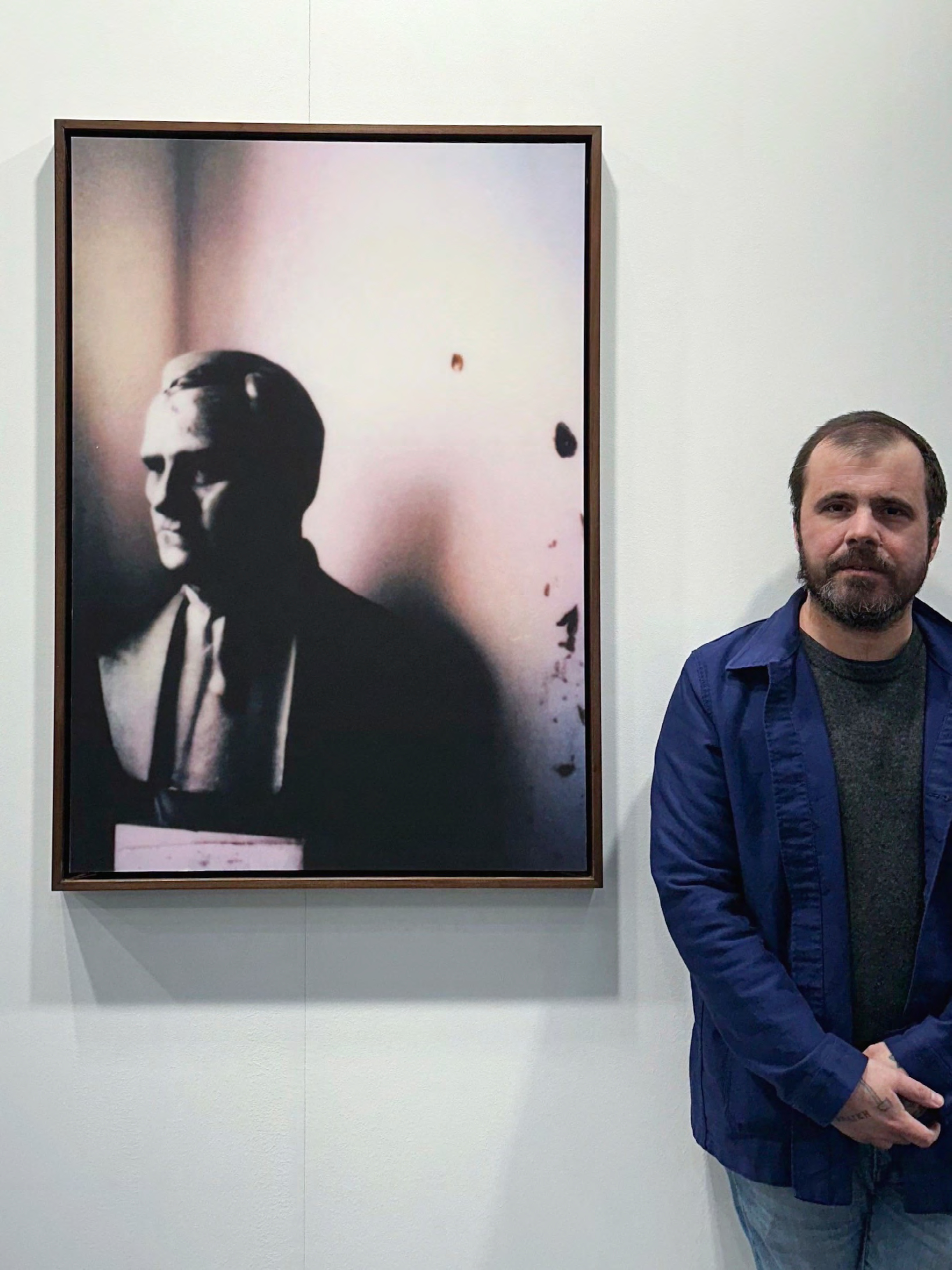
When exhibited, the framed Polaroids, the print Augusto and the neon 1919 shift the question once more. The word Versailles glows like a desirable sign; the title instead returns us to the treaty of 1919 and the post-war landscape, a space of mourning, frustration and political recomposition that European fascisms learned to exploit. Faced with that date, the anonymous busts commemorate no one. They wait.
- Work
- approx. 45 Polaroids
- Process
- Modelling, generative image, Polaroid
- Format
- 88 × 107 mm